
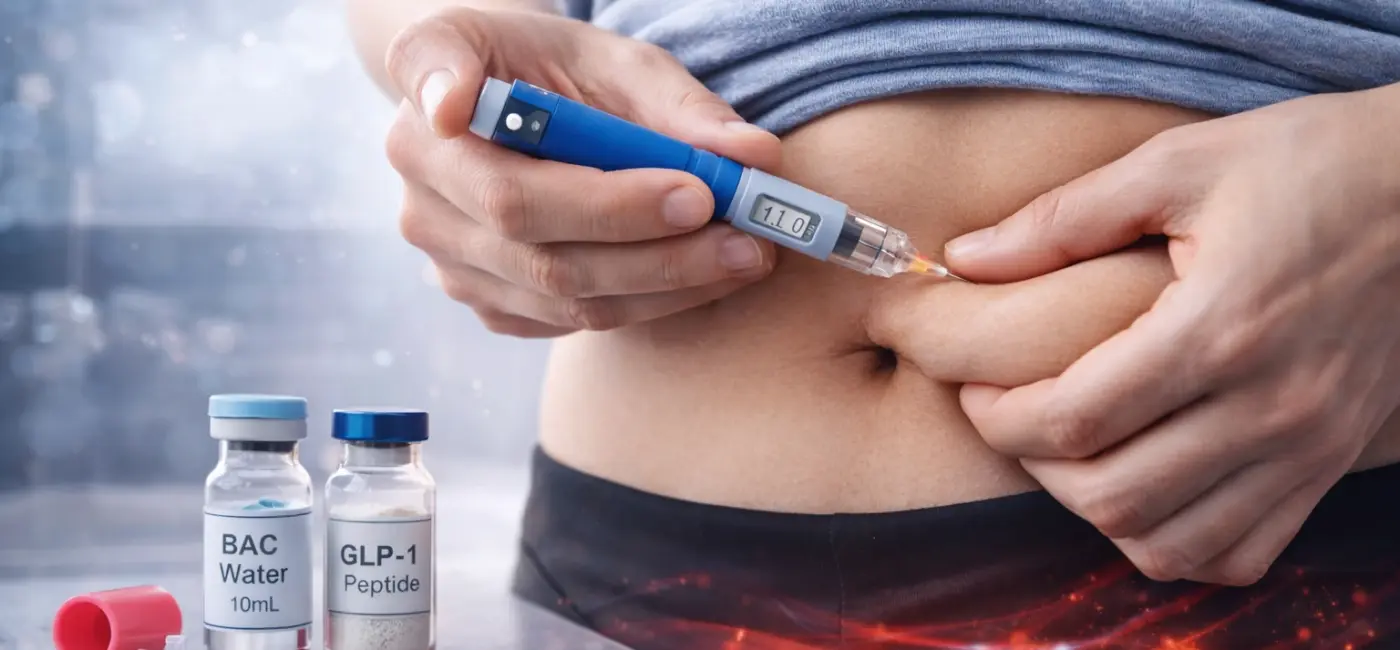
BAC Water for Peptides | Mixing & Safety Guide
Peptides usually come as a freeze-dried powder that needs to be mixed with a sterile liquid before use. While this might seem simple, it’s important to be careful. Choosing the right liquid and using the correct method keeps the product safe and effective. Knowing how to use bacteriostatic water for peptides is key.
This guide explains what bacteriostatic water is, how it differs from sterile water, how to mix peptides properly, and how to store them safely. The goal is to give you clear and helpful information.
Why Proper Peptide Mixing Matters
Peptides are stable when they’re still in powder form, but they become less stable after mixing. If you don’t mix them correctly, they can get contaminated or lose quality.
Mixing peptides isn’t complicated, but it’s important not to hurry. Using clean techniques, the right liquid, and storing them properly helps lower the risks.
If you’re getting injectable peptides with a professional’s help, preparing them the right way is very important. Safety starts before you take the first dose.
What Is Bacteriostatic Water?
If you’re new to this, you might wonder: What is bacteriostatic water?
Bacteriostatic water is sterile water containing a small amount of benzyl alcohol, which acts as a preservative to slow bacterial growth after the vial is opened.
Because of the preservative, bacteriostatic water can be used for more than one dose when a professional is guiding you.
Regular sterile water doesn’t have a preservative and is meant for one-time use. Bacteriostatic water, on the other hand, is made for several uses from the same vial if you handle it correctly.
This difference matters if you need to prepare injectable peptides to use over a few days.
Why It Matters for Peptide Safety
Every time you put a needle into a vial, there’s a chance it could get contaminated. Even a small amount of bacteria can grow if the conditions are right.
Using bacteriostatic water the right way helps lower this risk. The preservative slows down the growth of germs, giving extra protection when you also use clean techniques.
But the preservative isn’t a substitute for careful handling. Always use alcohol swabs, keep your work area clean, and throw away needles safely.
To keep peptides safe, pay attention to these points:
- Sterile reconstitution
- Clean storage
- Avoiding repeated contamination
- Respecting expiration dates
If you skip proper preparation, you could harm both the product’s quality and your own safety.
Peptide Reconstitution Guide
This section offers a basic guide to mixing peptides for learning. Always follow your healthcare professional’s instructions.
Step 1: Prepare a Clean Environment
Wash your hands well with soap and water. Make sure you’re working on a clean, bright, and tidy surface.
Step 2: Disinfect Vial Tops
Wipe the rubber tops of both vials with alcohol swabs and let them dry fully before you use a needle.
Step 3: Draw the Correct Amount of BAC Water
Use a sterile syringe to draw up the amount of bacteriostatic water you need. Make sure the needle doesn’t touch anything that isn’t clean.
Step 4: Inject Slowly Into the Peptide Vial
Put the needle into the peptide vial and aim the liquid at the inside wall. This helps avoid putting too much pressure on the powder.
Do not shake the vial. Gently swirl it until all the powder dissolves.
Step 5: Allow Complete Dissolution
If needed, let the solution sit for a few minutes. It should look clear when it’s fully mixed.
Mixing peptides the right way helps keep them stable and clean.
BAC Water Storage & Handling
Storing bacteriostatic water the right way keeps it in good shape.
General storage recommendations include:
- Store unopened vials according to label instructions
- Refrigeration is often recommended after opening
- Keep away from direct light
- Avoid extreme temperatures
How long bacteriostatic water lasts after opening depends on how you store it and what the manufacturer says. Many healthcare providers suggest throwing away opened vials after a certain time to lower the risk of contamination.
Always use a new, clean needle every time you enter a vial. Never reuse needles.
If you’re not sure, check the instructions for BAC Water 10ml and follow your healthcare provider’s advice.
Storage & Safety Scenario
Suppose someone mixes a peptide and then leaves the vial out at room temperature for a few days.
What could happen?
- The peptide may degrade faster at higher temperatures
- Preservative protection may be reduced over time
- Contamination risk may increase
- Potency could decline
Best practice would include:
- Refrigerating the reconstituted vial promptly
- Labeling it with the date of mixing
- Using sterile technique for every withdrawal
- Discarding the solution according to professional guidance
Even small mistakes can affect stability. Sticking to good habits helps lower avoidable risks.
Common Mistakes to Avoid
Some mistakes happen more often than people think.
- Using tap water instead of sterile or bacteriostatic water
- Shaking the vial aggressively
- Reusing needles
- Touching the needle to non-sterile surfaces
- Ignoring expiration dates
- Storing reconstituted peptides outside recommended conditions
Mixing peptides safely always means using clean techniques and taking your time.
Frequently Asked Questions
What is bac water for peptides?
It is sterile water with a preservative that helps reduce bacterial growth during multi-dose use.
What is bacteriostatic water use?
It is used for diluting medications or peptides that require sterile reconstitution under supervision.
How do you mix peptides safely?
Use clean hands, disinfect vial tops, inject slowly into the vial wall, avoid shaking, and refrigerate as directed.
How long does bac water last after opening?
Shelf life after opening depends on storage and professional guidance. Many providers recommend discarding after a defined time period.
Does Bac water need refrigeration?
Storage recommendations vary. Refrigeration is often advised after opening.
Can sterile water replace bacteriostatic water?
Sterile water lacks a preservative. It is typically intended for single use, while bacteriostatic water is designed for multi-dose applications.
Responsible Preparation & Handling Principles
Safe peptide use starts with careful preparation. Using the right liquid, keeping things clean, and storing everything properly protect both the product and your health.
Knowing the process helps lower risks. Don’t rush or make guesses when preparing peptides. Every step, from washing your hands to putting vials in the fridge, helps keep things safe.
If you’re about to mix injectable peptides, read all the product details for BAC Water 10ml first. If you’re not sure about anything, ask a qualified professional for advice on mixing and storage. Handling peptides carefully is important for safe and consistent use. Simple habits, like labeling the date you mixed the solution and keeping vials in a set spot in the fridge, help avoid mix-ups. Keep your supplies organized and throw away any solution that looks cloudy or off. Following a routine and taking your time with each step makes mistakes less likely and keeps your product safe.